
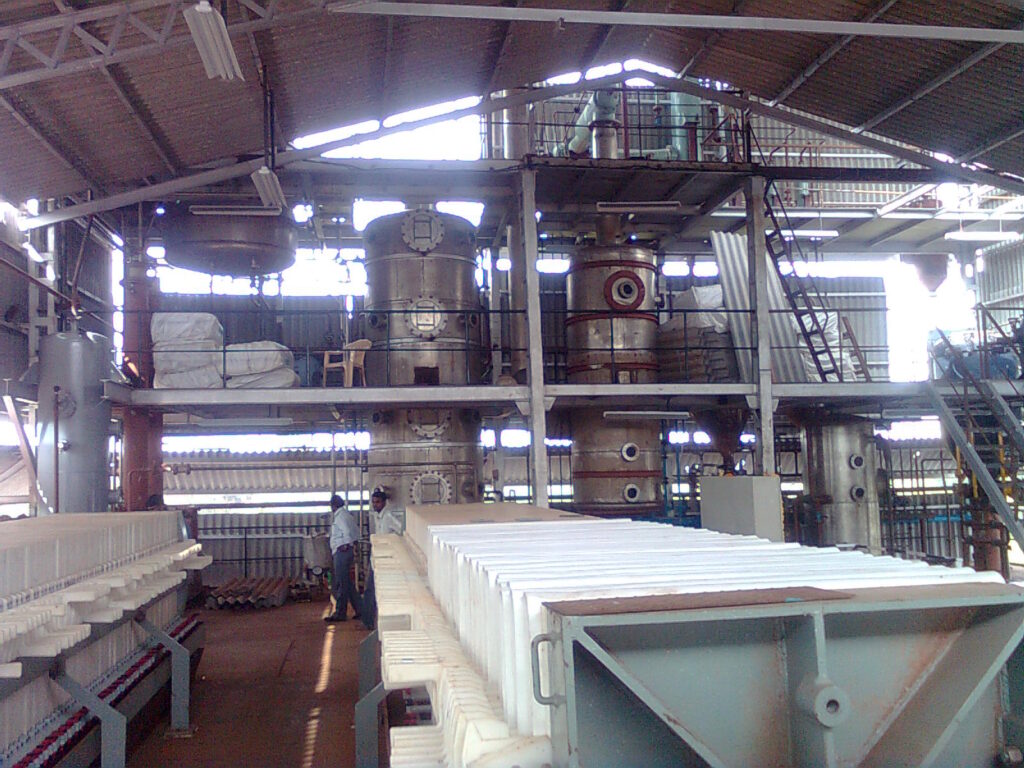
Vegetable Oil Refinery

Crude vegetable oils extracted from seeds, fruit pulp, crop plants, or kernels by mechanical extraction or solvent extraction process or a combination of both contain a variety of impurities and unwanted components like phosphatides, colour pigments, odoriferous compounds, metal contaminants and free fatty acids (FFA)

The refining process removes these undesirable components to make oil suitable for human consumption. Various methods to refine vegetable oils depend on the raw material, quality and desired quality parameters of the refined oil.

The refining processes included  degumming, neutralization, bleaching, dewaxing, deacidification or deodorization and winterization. The combination of processes used depends on the source of oils.

The refining process also depends on the methods used for the removal of free fatty acids includes, Chemical Refining and Physical Refining.

The steps in the oil refining process are as follows

Degumming

The first step of refining is degumming. Its purpose is to remove seed particles, impurities, and most of the phosphatides, carbohydrates, proteins and traces of metals.

The crude oil is treated with food grade processing aids and/or water at a temperature around 100°C, which leads to hydration of most of the phosphatides, proteins, carbohydrates and traces of metals. The hydrated material precipitates from the oil and is removed.

Bleaching

The purpose of bleaching (or decolorizing) is to reduce the levels of pigments such as carotenoids and chlorophyll, but it also further removes residues of phosphatides, soaps, traces of metals, oxidation products, and proteins. These trace components interfere further processing. They reduce the quality of the final product and are removed by adsorption with activated clay and silica.

Bleaching earth originating from pure refining plants and / or hardening plants, which can contain nickel is excluded from recycling into the feed materials and is disposed of outside the feed sector.

If vegetable oils contain unacceptable levels of PAH’s (polycyclic aromatic hydrocarbons), activated carbon is added to absorb and eliminate the PAH’s. The used activated carbon is separated by filtration and disposed of in a suitable way outside of the food and feed sector.

If also heavy polycyclic aromatic hydrocarbons are present, activated carbon shall be used for their removal. Dosage of these adsorption agents should be adapted to ensure the removal of the specific substances. The bleaching clay containing all these substances is separated by filtration. Those processes are partly done under vacuum and at temperatures below 150°C.

Dewaxing/ Winterization

Winterization is a Separation process whereby saturated triacylglycerols/ waxes are crystallized and removed in a filtering process to avoid clouding of the liquid fraction at cooler temperatures.

Some oils are dewaxed before packing so as to remove waxes, which are dissolved in the oil. Some of the oils do not need dewaxing as they contain little or no waxes.  Oil contains appreciable quantities of wax to give a hazy appearance during winter season due to precipitation of dissolved waxes and hence require being dewaxed. Dewaxing is carried out by chilling the oil up to 10-15°C followed by filtration of precipitated solids. The oil thus treated gives a sparkling appearance even in winter temperatures.

Winterization is another name to the process of dewaxing. The name winterization appears as during winter when the temperature is low, waxes present in the oil crystallizes, they give hazy appearance to the oil.

Deodorization

The purpose of deodorization is to reduce the level of free fatty acids and to remove odours, off-flavours and other volatile components such as pesticides and light polycyclic aromatic hydrocarbons by a stripping media. Careful execution of this process will also improve the stability and the colour of the oil, whilst preserving the nutritional value.

The deodorization process is carried out under vacuum (0.5 – 8 mbar) and at temperatures between 180° – 270°C, and using a stripping media.

Conditions should be adapted within these ranges as appropriate to ensure the removal of the specific substances.

Careful execution of these four processing steps ensures that fully refined oils possess good organoleptic and physicochemical qualities.